
Soaring transport prices between Rumonge, Bururi, and Bujumbura : passengers at the end of their rope
For weeks, users of the Rumonge–Bujumbura and Rumonge–Bururi lines have been denouncing a dramatic increase in transport fares. Drivers cite the fuel crisis, while passengers are sinking deeper into poverty.
INFO SOS Médias Burundi
Anger is growing on the RN3 and RN16 highways. The price of a transport ticket between Rumonge (southwest) and Bujumbura, the commercial city, has risen from 10,000 to 15,000 Burundi francs in the space of a few days. This amount far exceeds the official rate of 6,500 francs. The same observation is made on the Rumonge–Bururi (south) line : passengers are now paying up to 15,000 francs, while the regulated cost should not exceed 5,000.
« It’s no longer bearable. We’re asked to pay more than double the normal price, without explanation, without a receipt, without anything, » laments Étienne, a merchant who regularly commutes between Rumonge and Bujumbura. « Two weeks ago, I was still paying 10,000. Now, it’s 15,000 or you stay put. »
Transporters cite fuel shortages
For the drivers, the justifications are clear. « With the scarcity of fuel, we have no choice. We’re getting our supplies on the black market, and at unbearable prices, » explains a minibus driver on the RN16. According to several reports, a 20-liter can of fuel currently sells for 300,000 francs, and a 40-liter can can go up to 600,000. Officially, the same quantities are reportedly sold for 80,000 and 160,000 Burundi francs, respectively.
This situation reflects a broader energy crisis affecting the entire country.
A fuel crisis paralyzing Burundi
For more than 48 months, Burundi has been facing a severe fuel shortage, caused by a decline in its foreign currency reserves and import difficulties. Petrol stations often run dry, and endless lines form as soon as refueling is announced.
The consequences are numerous : slowdowns in public transportation, rising food costs, disruptions to hospital services, and reduced productivity in many economic sectors.
Despite agreements announced with regional partners to improve supplies, the situation remains critical on the ground.
Populations left to fend for themselves
Passengers denounce the authorities’ inaction in the face of speculation. « It’s the poorest who pay the highest price. We’re abandoned, » complains Marie-Claire, a vendor at the Rumonge market. « We can no longer travel, not to sell, nor to get medical care, nor even to go to school. »
Faced with this uncontrolled surge in fares, many users are calling on the government to intervene quickly. They demand not only strict regulation of transport prices, but also concrete measures to restore a stable and affordable supply of fuel.
« It’s not just a transportation problem, it’s a survival problem, » concludes a student we met at the Bururi bus station.
———
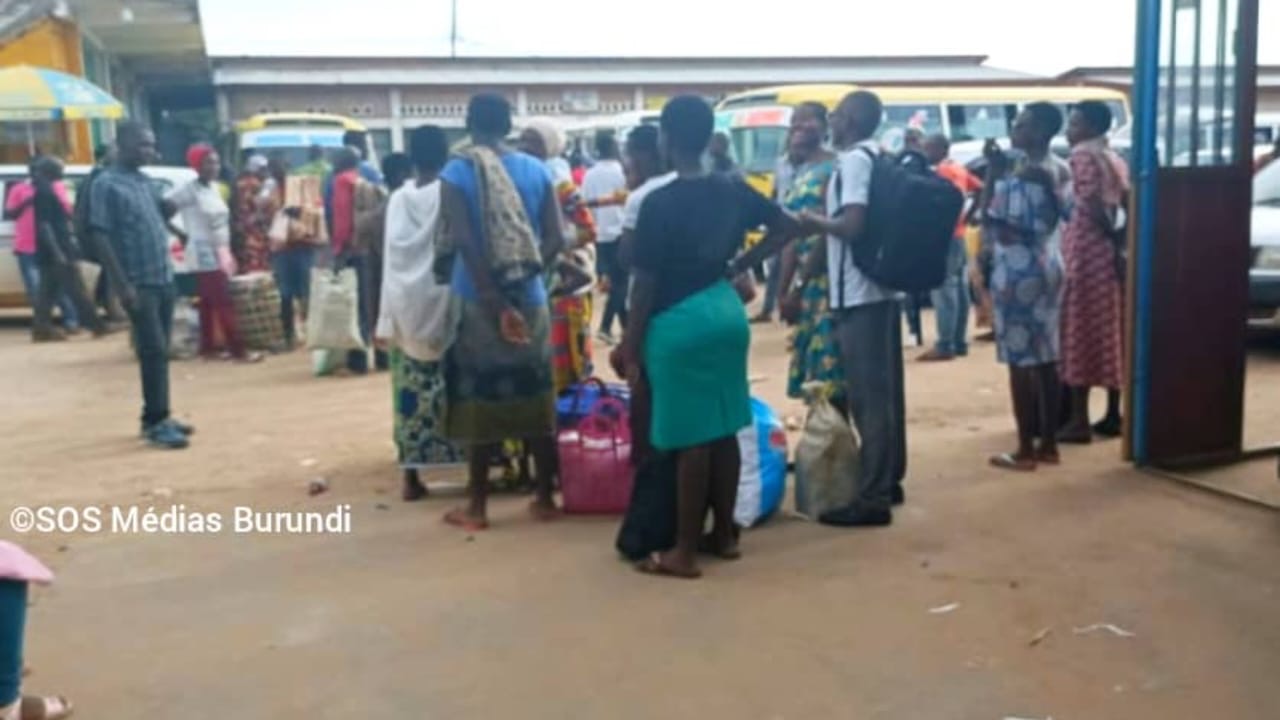
Passengers wait for a bus in the main parking lot in the town center of Rumonge in the southwest of Burundi (SOS Médias Burundi)