Bukavu : crossing 4 countries to reach Uvira : an increasingly difficult and costly journey
Residents of Bukavu, a city located in the eastern Democratic Republic of Congo (DRC), are facing increasing challenges when traveling to Uvira, another city in the same province. This journey, which previously took six hours and cost around US$10, is now a multi-day trek, with costs rising dramatically to US$70.
INFO SOS Médias Burundi
It is a complex and perilous route.
Travelers, particularly those from Bukavu, now pass through four countries to reach Uvira : the DRC, Rwanda, Tanzania, and Burundi. This prolonged detour is caused by the presence of the M23 armed group in certain areas of the region, particularly in the Rusizi Plain in Katogota and Kamanyola, making the main road dangerous. On the other hand, in areas under the control of the FARDC (Armed Forces of the Democratic Republic of Congo) and the Wazalendo militia, particularly in Luvungi, the situation seems a little more stable, but still tense.
A journey turned into an ordeal
Anne Sifa, a student at the University of Bukavu, describes the situation. « We used to leave Uvira for Bukavu in six hours, but now it takes up to three days because we have to pass through several countries, traveling both night and day, which makes the journey particularly difficult, » she says.
Students and residents of the region report that the cost of transport tickets has increased considerably. Where they once paid $10 for the journey, they now have to pay $70. In addition to transport fees, they also have to pay for travel documents. What was once a simple journey with an ID card is now accompanied by additional fees for travel documents, including $50 for a passport-in-lieu document and $10 for the yellow vaccination card.
One of the major sticking points is at the Kobero border between Burundi and Tanzania. Congolese travelers are often forced to pay 100,000 Burundi francs (BIF), or about $15, upon arrival at the border. Those arriving with temporary documents, such as those from M23-controlled cities like Bukavu and Goma, often find themselves detained on charges of being affiliated with the M23. They are then forced to pay $100 for their release by the Burundian authorities.
Consequences for education and the local economy
According to a civil society organization in Uvira, more than 400 students from Uvira and Baraka, who were pursuing their studies in Bukavu and Goma, find themselves unable to return to school due to the exorbitant costs of travel and the necessary documentation. Their studies are on hold because they lack financial means to return.
Faced with this difficult situation, the residents of Uvira are calling on the Congolese authorities, particularly the FARDC and the Wazalendo militias, to conduct military action against the M23 in Kamanyola, Nyagenzi, and Bukavu in order to secure these areas and allow a return to normalcy for the local population.
A persistent crisis in eastern Congo
For several decades, eastern DRC has been plagued by armed conflicts involving various rebel groups and government forces. The presence of the M23, a rebel movement supported by foreign interests, according to the UN, is exacerbating the situation by displacing thousands of civilians and disrupting economic and social activities. Clashes between the M23 and the FARDC, often supported by local Wazalendo militias, cause ongoing insecurity.
Furthermore, local populations are caught between the abuses of armed groups and growing economic hardship. Deteriorating road infrastructure, illegal roadblocks erected by militias, and excessive taxes imposed on travelers exacerbate the suffering of the region’s inhabitants. This humanitarian crisis has led to a mass exodus to safer areas, including neighboring countries, putting even more pressure on reception services and local infrastructure.
A humanitarian emergency
The ordeal of travelers between Bukavu and Uvira reflects the growing tensions and persistent instability in the eastern Democratic Republic of Congo, where war and armed conflict continue to affect the daily lives of civilians. The cost of a journey that has become increasingly long, costly, and risky is a heavy burden for the population, particularly for students who find themselves trapped in this inextricable situation. It is urgent that the international community and Congolese authorities take concrete measures to stabilize the region and ensure the free movement of people.
——-
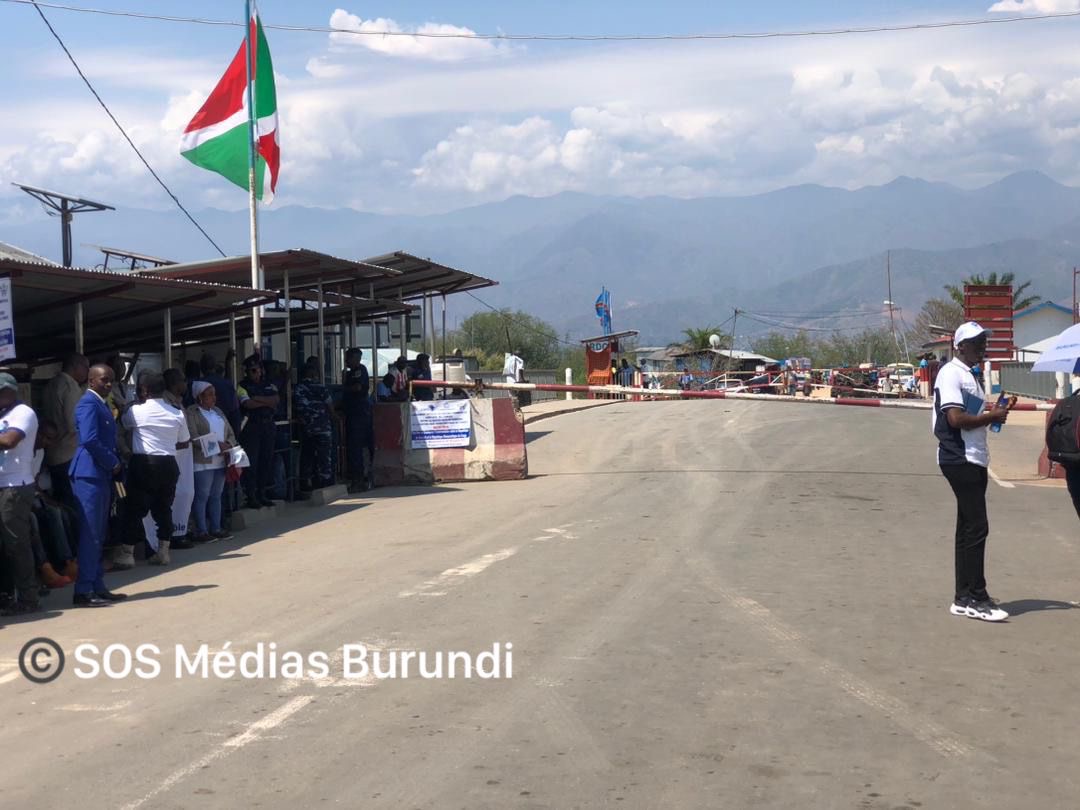
Passengers on the Gatumba-Kavimvira border, November 2024 (SOS Médias Burundi)